


It’s officially summer and here in Palo Alto, I keep the patio open all day and all night. We live in a cozy one bedroom apartment that’s nice enough to have in-unit laundry and modern appliances, yet humble enough to get little sunlight after 11am. In the afternoon, it can get a bit dreary, but the good thing is we never need to use the A/C.
Watermelons are in season. I, along with the other Costco shoppers, give the melons a pat-pat to check the sound, rotate them around to check the yellow spot on the bottom, and give it a test lift to see how heavy it feels relative to its size.
I stay at the office longer, because at 5pm, outside looks like 3pm in December. By 6am, it’s already light outside, so I end up trying to go for a walk, stretch, make coffee, journal, read, and work out. Sometimes, I’m able to do it all. Other times, I end up running out of time.
I can gauge how much urgency I carry based on how I commute. Biking to the CalTrain station and then taking the train takes about 35 minutes. Driving takes less. But I feel worse when I drive. I think about the greenhouse gas emissions, the additional cost (work reimburses the train), the logistics of having to refuel soon, how much I dislike waiting at the Costco gas station, and the potential traffic.
And yet, on the majority of in-office days, I still drive. I make excuses, like how it’s more convenient to drive when I work out and then shower at the Stanford gym, so I don’t have to stuff my wet towel into my backpack and draw unnecessary amounts of attention at the office when I take my towel out to let it dry, or alternatively, keep it damp inside my backpack for the entire day.
Some things demand true urgency, like when your pregnant wife’s water breaks, your team is down ten with only five minutes left in the 4th quarter, or when your favorite artist drops a last minute show and you need to get through the Ticketmaster queue. But there’s also false urgency—rushing to board a plane, responding to notifications on your phone, and in my case, driving to work when I could simply plan ahead, give myself more time, and contemplate the meaning of life from the train window.
Backpacking in Yosemite
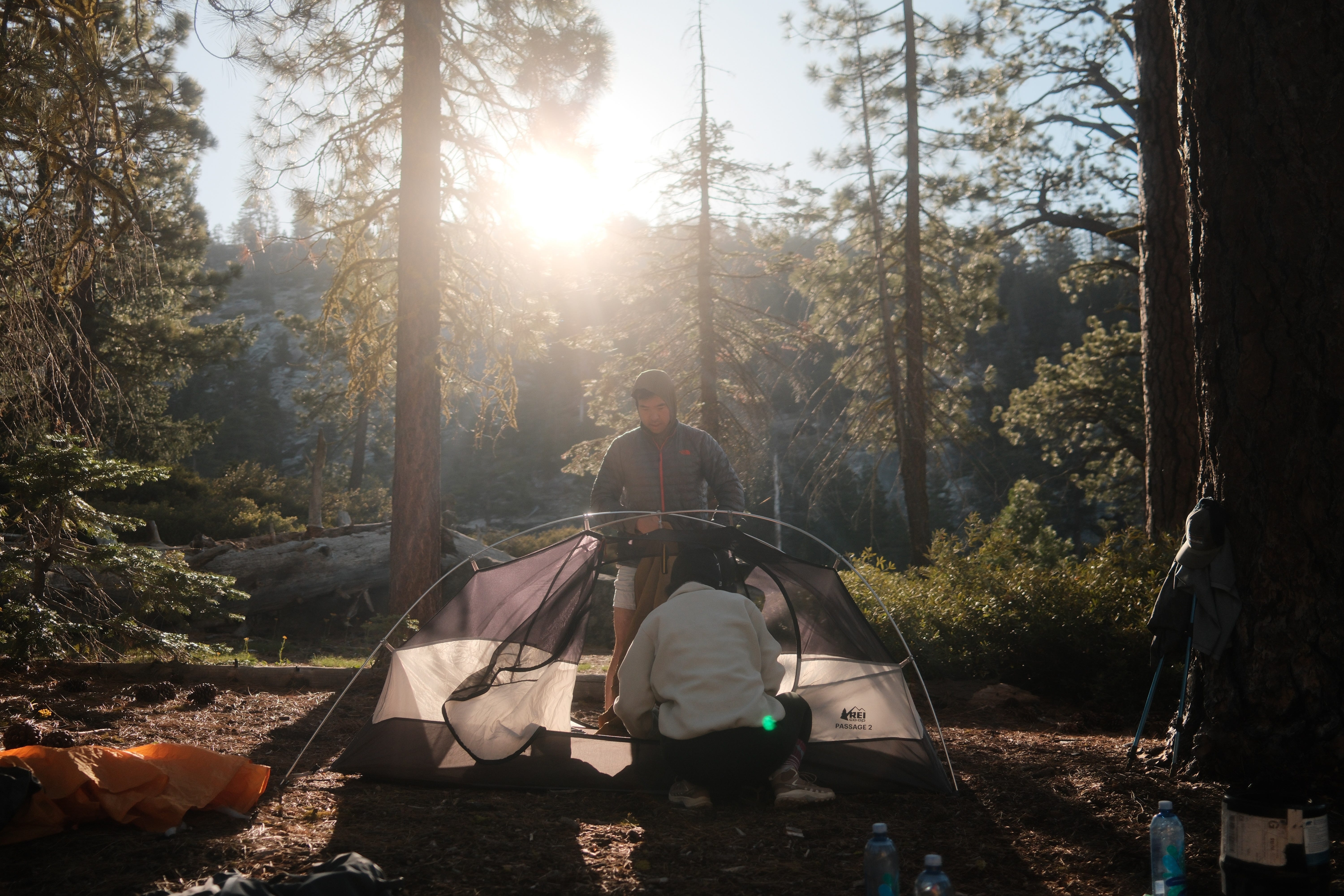
We went backpacking in Yosemite, but didn’t actually start hiking until 6:30pm. My mind was still racing with thoughts about work and unfinished tasks, but as we ascended the 3,000 vertical feet of Yosemite Falls, my awareness began to shift to my body’s movement, breath, and sweating. We arrived at the final sliver of dusk, with just enough time to set up camp before we were fully enveloped by night. Some of us stood while some of us sat as we boiled water and prepared a late dinner. Hungry and exhausted, it made no difference that I was eating a freeze-dried meal with a 50-year shelf life instead of a real meal. In fact, the headlamp cast a spotlight into my aluminum sack of rehydrated kung pao chicken, not too unlike the intimate lighting of a fine dining restaurant.
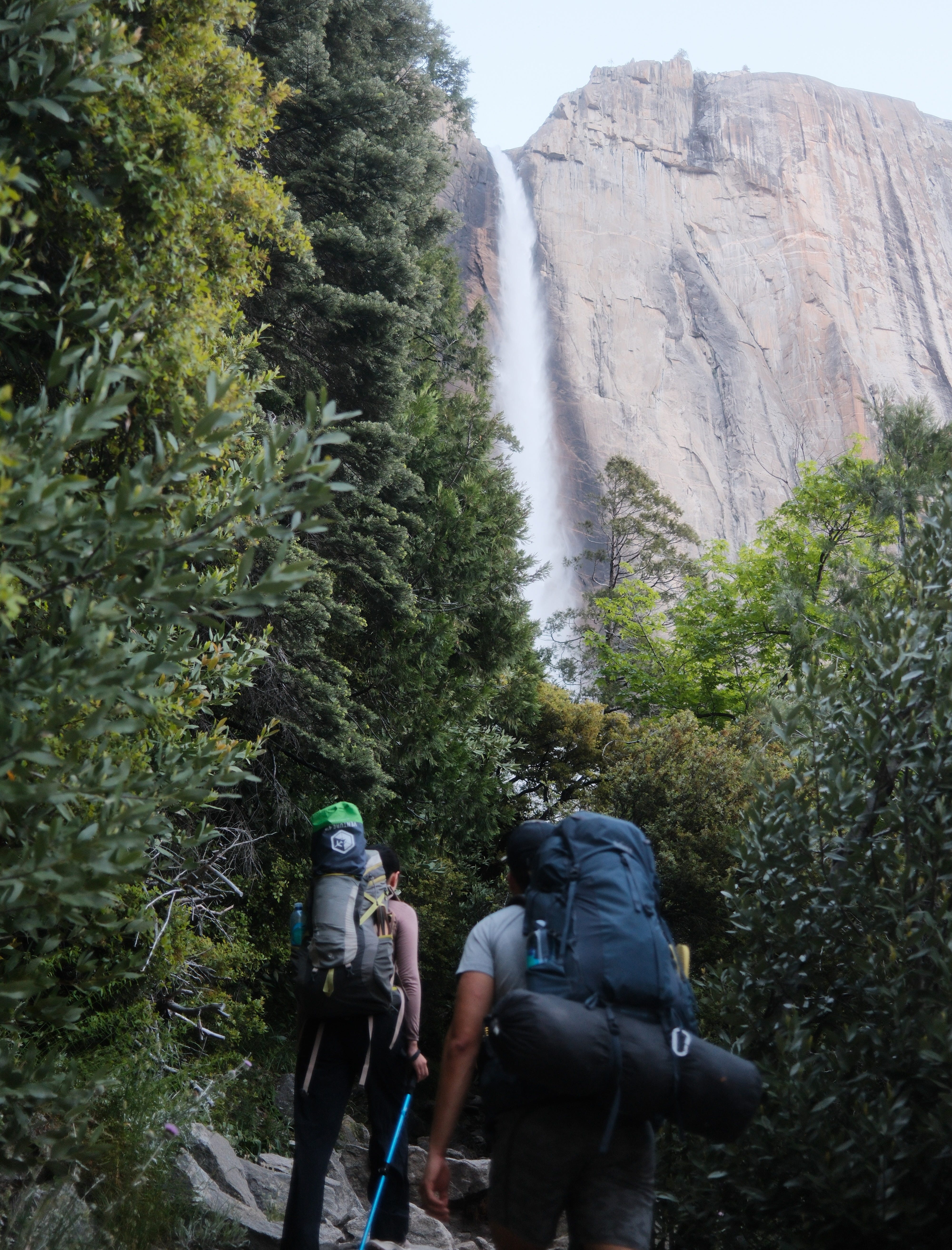
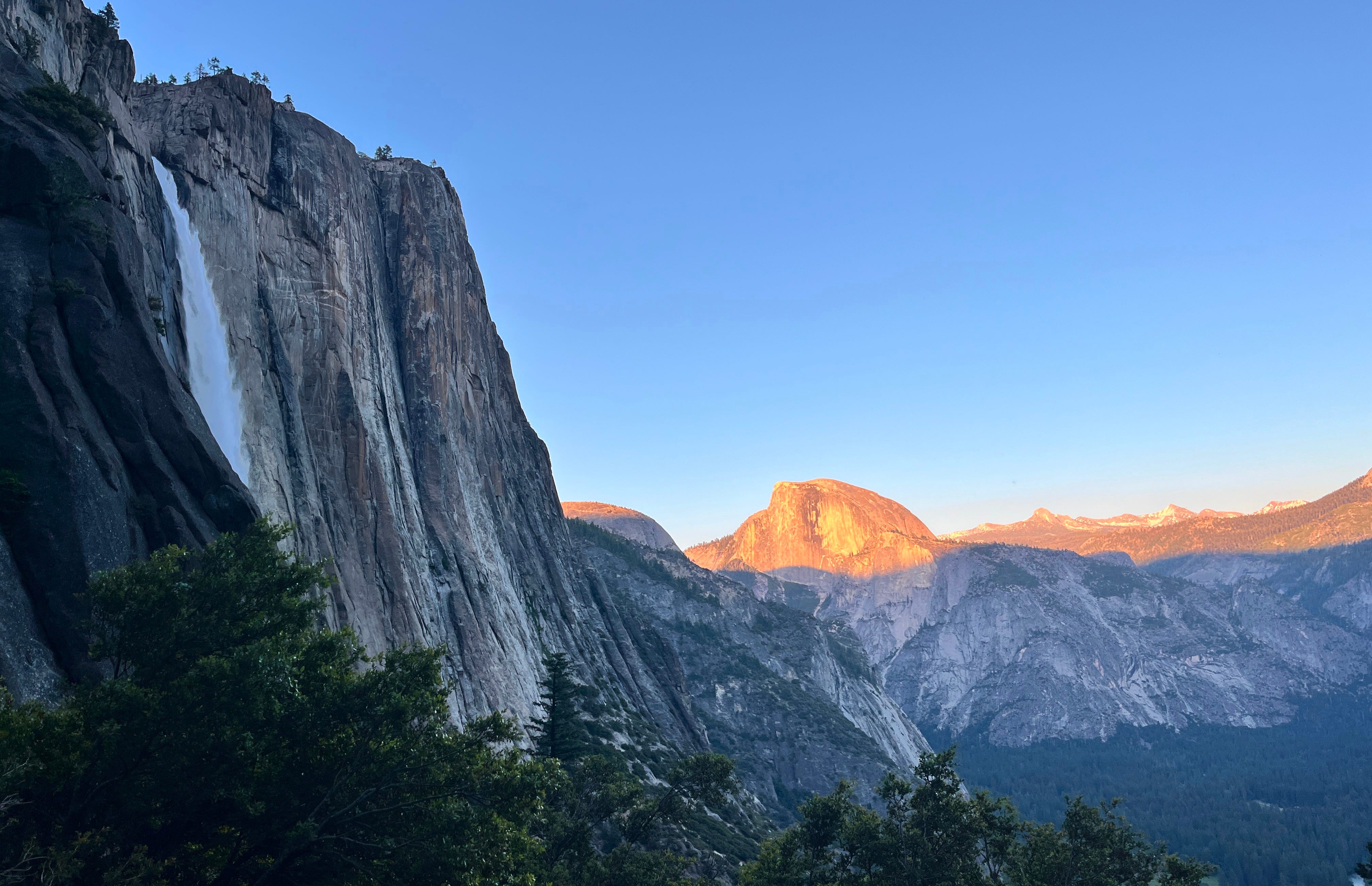
I’m never able to sleep in when camping. Despite going to bed more tired, without blinds and walls to keep out the light and sound, I’m up as soon as the sun is. It was clearly morning. Light enough to see everything, but still early enough that everything around me was still shaded and cold. We weren’t in a rush, so I didn’t bother waking up anyone. I knew we were somewhere by the top of Yosemite Falls so I started to wander around in my flip flops (camp shoes), shorts (I didn’t bring pants), and my North Face puffy without a shirt underneath. I could hear the falls before I could see them and the sign pointed me towards the cliffs and open views. I bumbled down the trail, mindful of the ground so I wouldn’t slam my toes into a rock. When I got to the carved granite steps, I started to feel the falls. My face probably looked like I was skydiving, but I was still standing vertical. The lookout was the farthest I could go. Standing at the apex of the falls, my eyes scanned from left to right and then down, watching as different tints of blue, grey, and white surged past me at 5,000 gallons per second. I felt pretty awake after that.
It’s ironic that backpacking is often thought of as an escape, an irregular adventure intentionally the opposite of how we live normally. You sleep on the ground, are lucky if you can bathe in an alpine lake or flowing creek, have to carefully plan your food and water, and move entirely by foot. Is it barbaric to carry everything on your back like a pack mule, or is it actually weirder that we’ve somehow normalized sitting sedentary in a car for 15 minutes so we can drive to our workout class to sweat for the first time that week?
As I hiked, I kept thinking to myself that this is actually real life. Not the 8+ hours of sitting at a desk, staring at a computer screen. How rare it is to be outside for the entirety of golden hour, sunset, twilight, dusk, and finally, night.
Of course, real life is both the wilderness and the clean, temperature-regulated buildings we inhabit. “Real life” is everything in between too. It’s the yo-yoing between wanting professional success and personal adventures. It’s the tension between wanting the freedom to backpack whenever and make a solid six figure salary. It’s the messy process of making decisions, trying new things, failing, and doing it all over again.
Free Agents
Last September, I wrote about missionaries vs. mercenaries and proposed Free Agents as a third way to approach your career. A month later, I started a community with the same name and we’ve met monthly since. From the beginning, I could see multiple ways the group could evolve. It might become a group of people all on sabbaticals. Or post-corporate-turned-entrepreneurs. A mishmash of group coaching meets mastermind meets peer group. Or tech bros (and gals) each with their own Substack. In reality, Free Agents has all of these elements but goes beyond something easily described.
After months of wanting to start a community, but only thinking about it, I recruited the initial members and kicked things off last October, coinciding with starting my new job. It might seem counterintuitive, but returning back to a full-time job was the impetus to finally start Free Agents. I had been in the matrix before, popped out, and now was going back in. Voluntarily, but still. I wanted to surround myself with people who approach their work and life unconventionally. They would remind me of what it’s like to be outside the matrix and help me discern what to accept (9-5 schedule, less freedom) and what assumptions to challenge (do I really need to respond to messages immediately right before bed or schedule back-to-back meetings all day?)
Rather than question whether a concept is right or wrong, I look for how useful it is. For me, the notion of being a “Free Agent” has been helpful because it applies regardless of whether I’m an employee, entrepreneur, or in the in-between. It’s less about the “what”—job title, income, industry—and more about my relationship with work.
Here are some qualities and ideas I aspire to have in my work that speaks to this ethos.
Free Agents…
draw inspiration from artists for their creativity, athletes for their discipline, and entrepreneurs for their ability to create value.
are skeptical of status games. They cringe a bit at LinkedIn, aren’t fawning over fundraising announcements, and understand that venture capital isn’t the only path to building a successful business.
view money as a vital resource, but not the end all be all. They use money like how real estate investors or poker players construct bets.
see prestige, status, and legibility as tools, not primary pursuits. Corporate climbers seek out MBA programs and company logos like a hungry hippo seeks out tiny white plastic balls. Disillusioned wanderers exit completely and vow to never return. In the middle is something more nuanced: having a track record of being at recognizable institutions confers a level of trust onto a person. If you’ve worked in FAANG, big three consulting, or big four accounting, or top 14 law, that means something.
compared to the starving artist stereotype, don’t force it. Trying to make it as a Broadway performer or Hollywood actor isn’t worth a decade of waiting tables at Denny’s. Requirements and constraints are honored just as much as visions and dreams.
don’t organize their life around work. They have non-negotiables outside of work, and they design their livelihood around protecting them. A surfer lives near the beach and follows the swell. A writer protects the morning. A parent refuses to miss dinner. A gardener lives by the seasons. A birder travels to where the cool birds migrate. It’s not that work doesn’t matter. Work is just one part of a big life.
embrace their past experiences. They appreciate their prior version of ambition even when it got them into roles that no longer make sense. Ex-bankers were trained to hustle. Engineers learned how to build things. Former consultants crafted communications for executives. A Free Agent doesn’t disown their resumé.
let the lines between work and non-work blur. A job is on one end of the spectrum, and watching TV is on the other, but a side hustle with a friend is somewhere in the middle. What about volunteer work? Participating in a local organization? Hosting barbecues, potlucks, and board game nights? Coordinating logistics for all these require work. A Free Agent values the other life roles they play beyond the money-making ones or what’s considered “work”. They take on the role of parent, caregiver, friend, partner, son or daughter, and uphold those roles just as seriously as they take their work.
don’t shy away from technology. Instead of avoiding new tools, they embrace them. AI is neither the devil nor god. Being a Luddite might sound clever, but it just automatically puts you out of the arena and onto the sidelines.
want to build something durable that stands the test of time. Tangibility transcends the divide between physical and digital, and is more of a feeling that the creator has about what they’ve created. It might be leather suede bags, a photography business, or an in-person community. Regardless, there’s something real, tangible, and felt about it. The opposite would be NFTs, viral short-form clips, and thinkpieces about AGI.
I struggle with describing Free Agents because all of us are still figuring it out. There are multiple tensions to sit with and observe: balancing freedom with stability, doing meaningful work without it becoming all-consuming, and being a part of something without burning out or feeling used.
Maybe that’s why the concept works for me. It gives language to the tension instead of pretending the tension poofs away magically. It says we can care about work without worshipping it. We can care about money without being owned by it. We can pursue ambition without handing over the rest of our lives as a sacrifice.
Stuff I read
Tuesdays with Morrie - The best book I’ve read this year. Gets into some core truths about what it means to be human. Written as a conversation between two guys, one alive and the other dying.
Shaking the bones for joy - So good and so not AI.
Sadly, I only discovered Om Malik when I saw that he recently passed away. His interview with Brunello Cucinelli gave me a glimpse into a more human way to lead a company. Two quotes:
“…here in the company, you start at 8 AM, and at 5:30 PM you are forbidden to work any further.”
“The first time I was in New York, we had a tiny office, and they were emailing across it. I said, “No way. Just get up and go to your neighbor and ask them one thing, in one split second, in person.” First of all, you look me in the eye. You smell me, my presence. Maybe I take the opportunity to ask you about your family. Don’t you feel better than if you get an email? Maybe I smile and you feel even better.”
Yo you!
Wherever you are, I’m wishing you a fruitful July with lots of sunshine, watermelon, and time outdoors. I hope you can spot a few false urgencies in your life and squash them by slowing down just a wee bit.
Cut the cord. Put the phone down. Do something real. Run up a mountain. Roast a whole pig. Build a log cabin. Get sunburnt. Sweat profusely. Learn how to fly and bend time.
And when the real things get hard, don’t forget to ask for help along the way.
This was a great read. One of the contexts in which I've used the term "arbitrary urgency" (same as false urgency) is that people feel pressured to jump directly from one job to another with no more than a couple weeks between, even though they are not living paycheck to paycheck or anything, in which case the urgency would not be false or arbitrary. Of course, you and I have not subscribed to that. Yellowstone sounds great and the bullets describing Free Agents resonated, unsurprisingly. Glad you are still writing and continuing the adventure.
love the free agents description